In the contemporary workplace, where productivity and well-being are paramount, the ancient art of Feng Shui offers timeless wisdom for shaping our environments. Beyond mere superstition, it is a sophisticated system for understanding how spatial arrangements and decorative choices influence the flow of energy, or Qi, within a space. Thoughtfully selected office decor is not just about aesthetics; it is a strategic tool for cultivating harmony, enhancing focus, and fostering positive professional relationships. By applying these principles, one can transform a sterile or chaotic office into a supportive and energizing sanctuary that benefits both the individual and the collective.
Core Concept
At its heart, office Feng Shui is the practice of arranging and decorating a workspace to optimize the flow of vital life force energy, known as Qi. When Qi flows smoothly and abundantly, it supports clarity, vitality, and success. Conversely, stagnant or chaotic Qi can manifest as fatigue, conflict, and blocked opportunities. The decor we choose acts as a direct influencer of this energy. Each object, its material, color, shape, and placement, interacts with the space's inherent energy patterns. For instance, a healthy green plant in a corner represents growth and can lift stagnant energy, while a cluttered desk with sharp-edged objects creates disruptive "Sha Qi," or attacking energy. The goal is to create an environment where the decor intentionally guides Qi to be nurturing, balanced, and conducive to the work at hand.
Traditional Feng Shui Perspective
Classical Feng Shui provides a structured framework for analyzing and enhancing an office through the lenses of Yin-Yang balance, the Five Elements, and directional energy. The office must strike a dynamic balance between Yin (receptive, quiet, dark) and Yang (active, bright, loud). Too much Yang from harsh lighting, loud colors, and constant noise leads to burnout and irritability. Excessive Yin from dim lights, muted tones, and isolation can cause lethargy and lack of motivation. Effective decor balances these forces: a Yang-active red accent item can be tempered by Yin-cool blue curtains or a soft, textured rug. The theory of the Five Elements—Wood, Fire, Earth, Metal, and Water—is central. Each element corresponds to specific colors, shapes, materials, and aspects of career life. Decor should be chosen to create a productive cycle of elements. For example, Wood (green, columnar shapes, plants) fuels Fire (red, triangular shapes, lighting). Fire then creates Earth (yellow, brown, square shapes, ceramics). Earth bears Metal (white, gray, round shapes, metal frames). Metal enriches Water (blue, black, wavy shapes, mirrors or water features). Water then nourishes Wood, completing the cycle. An imbalance, such as an overabundance of Fire element through excessive red decor, can lead to aggression and haste. Qi flow is paramount. The desk position is the "command position," ideally placed so one can see the door without being directly in line with it, symbolizing control and awareness. Decor should facilitate, not obstruct, movement. A winding path created by furniture placement is preferable to a straight, rushing corridor of energy. Symbolism also plays a role; art depicting mountains (stability) behind the desk and water (flow of wealth) in front can mirror ideal landscape forms.
Modern Interpretation
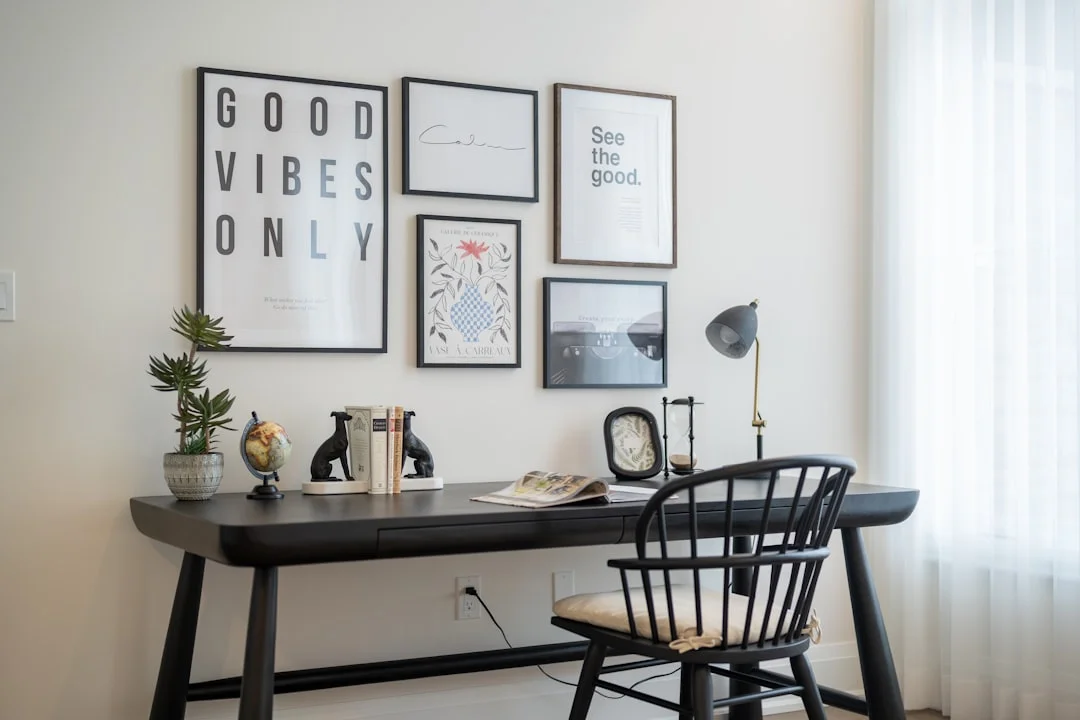
From a modern standpoint, Feng Shui principles align remarkably well with environmental psychology and ergonomic design. The concepts translate into tangible impacts on cognitive function, emotional state, and social dynamics within the office. Environmental psychology confirms that our surroundings directly affect our mood and behavior. The Feng Shui directive for a clean, organized desk minimizes cognitive load, reducing stress and improving concentration—a principle now backed by studies on clutter and mental performance. The use of natural elements like plants and wood, emphasized in Feng Shui, is supported by biophilic design research showing reduced stress, enhanced creativity, and improved air quality. The focus on personal empowerment through the "command position" aligns with the need for psychological safety and a sense of autonomy. An employee who feels exposed or surprised by passersby experiences low-level stress, inhibiting performance. Strategic placement of a screen or a tall plant can create a needed sense of privacy and security without isolation. Furthermore, the Five Elements theory can be seen as a language for creating sensory balance. A sterile, all-white office (excessive Metal) may feel clean but also cold and uninspiring. Introducing Wood element through plants and Earth tones through textiles can make the space feel grounded and welcoming, affecting team cohesion. The practical meaning is clear: decor is not frivolous; it is a non-verbal communication tool that sets the cultural tone, influences collective energy, and directly impacts productivity, collaboration, and employee well-being in measurable ways.
Insights
- Position a live, healthy plant in the southeast corner of your office or on your desk to symbolically nurture the Wood element, which is associated with growth, vitality, and new beginnings in your career.
- Always ensure your office chair is sturdy with a high back and place it so you have a solid wall behind you, providing both physical support and the psychological security of having your back protected.
- Incorporate a small, rounded crystal or a sleek metal desk accessory to represent the Metal element, which helps to introduce clarity, precision, and focus into your daily decision-making processes.
- Use a dedicated, attractive bowl or dish to corral small desk items like paperclips and USB drives, transforming chaotic clutter into a contained and intentional Earth element feature.
- Balance the strong Yang energy of computer screens and artificial lighting with soft, Yin textures like a wool throw or a fabric desk pad to prevent sensory overload and mental fatigue.
Conclusion
Improving office Feng Shui through decor is an integrative practice that bridges ancient environmental wisdom with modern needs for well-being and efficiency. It moves beyond arbitrary rules into the intentional curation of space. By understanding the flow of Qi, respecting the balance of Yin and Yang, and thoughtfully employing the Five Elements, we can design workspaces that do more than just house us—they actively support and enhance our professional journey. The ultimate goal is to create an environment where energy moves freely, elements are in harmonious conversation, and every decorative choice serves the higher purpose of fostering a productive, peaceful, and prosperous atmosphere for all who work within it.