How Can Feng Shui Improve the Energy of Your House?
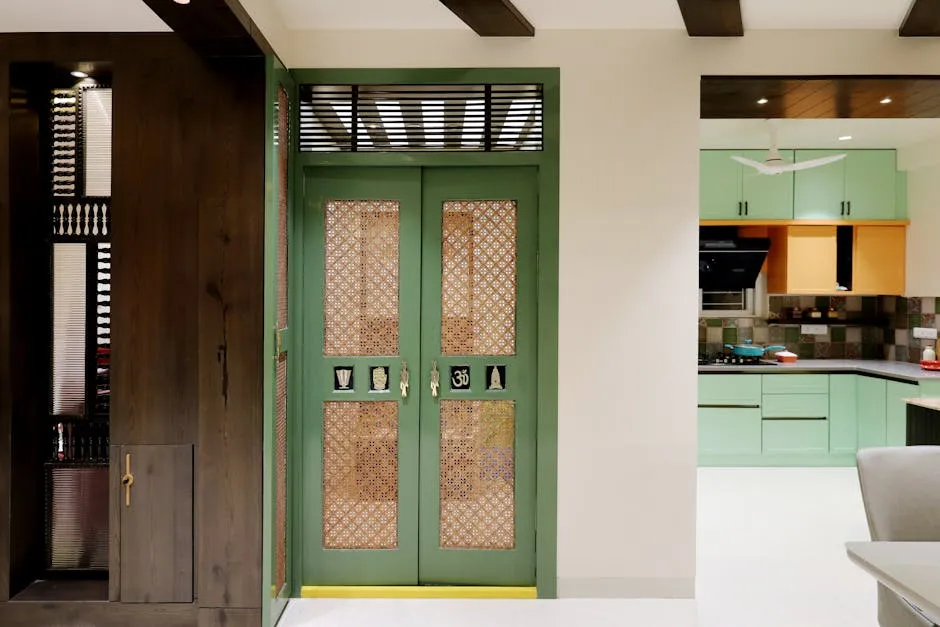
Feng Shui improves the energy of your house by optimizing the flow of Qi (life force energy) through intentional spatial arrangement, elemental balance, and harmonious design. This ancient Chinese practice transforms living spaces into supportive environments that enhance wellbeing, relationships, and opportunities. By applying specific principles to your home's layout, decor, and maintenance, Feng Shui creates energetic conditions that positively influence all aspects of daily life.
Key Concept
Feng Shui improves house energy primarily through Qi management—ensuring this vital force flows smoothly rather than stagnating or rushing. The practice identifies and remedies energy blockages caused by clutter, poor furniture placement, or architectural features that disrupt natural flow. Strategic placement of mirrors, for instance, can redirect Qi to neglected areas, while water features can activate wealth energy when positioned correctly.
The Bagua Map application systematically improves energy by dividing the house into nine life areas: career, knowledge, family, wealth, fame, relationships, creativity, helpful people, and health. Enhancing each area with appropriate colors, elements, and symbols activates corresponding energies throughout the home. For example, placing a healthy plant in the family area (east) strengthens family bonds, while adding metal elements in the creativity area (west) supports innovative thinking.
Five Elements balance transforms house energy by ensuring Wood, Fire, Earth, Metal, and Water elements exist in harmonious proportions. Each element corresponds to specific colors, shapes, and materials that influence energy quality. A balanced home might incorporate Wood elements (green colors, rectangular shapes) for growth, Fire elements (red colors, triangular shapes) for passion, Earth elements (yellow/brown colors, square shapes) for stability, Metal elements (white/gray colors, round shapes) for clarity, and Water elements (blue/black colors, wavy forms) for flow.
Cultural Meaning

In Chinese cultural context, Feng Shui improves house energy by aligning human dwellings with cosmic patterns and natural forces. The practice reflects the philosophical principle that homes should harmonize with their environment, receiving beneficial energies from favorable directions while shielding against harmful influences. This cultural approach views house energy as interconnected with celestial and terrestrial forces.
The cultural significance extends to the concept of "Feng" (wind) representing invisible energy movements and "Shui" (water) representing visible forms that channel energy. Improving house energy involves creating conditions where Qi flows smoothly like wind and collects beneficially like water in natural landscapes. This metaphorical understanding guides practical applications from room orientation to garden design.
Feng Shui also incorporates the Yin-Yang principle, ensuring houses contain balanced proportions of active (Yang) and restful (Yin) energies. Living areas typically emphasize Yang energy for social interaction, while bedrooms emphasize Yin energy for restoration. This cultural balance recognizes that optimal house energy supports all human activities through appropriate energetic conditions.
Practical Interpretation
In practical terms, Feng Shui improves house energy through specific, actionable adjustments. Decluttering represents one of the most effective improvements, removing physical obstacles that block energy flow. Regular clearing of unused items—especially in entryways, corners, and under furniture—immediately enhances Qi circulation and creates space for new opportunities.
Lighting optimization significantly improves energy by ensuring adequate illumination where needed. Bright entryways welcome positive energy, while layered lighting in living areas supports various activities. Natural light maximization through clean windows and strategic mirror placement amplifies beneficial Yang energy during daytime, while warm artificial lighting maintains comforting energy at night.
Furniture arrangement according to Command Position principles improves energy by placing key pieces (beds, desks, stoves) where occupants have clear view of room entrances without being directly in line with them. This positioning creates psychological security and allows optimal energy reception, transforming how spaces feel and function. Repairing broken items—windows, appliances, furniture—prevents energy "leaks" that drain household vitality.
Insights
- Feng Shui improvements work cumulatively, with small consistent changes creating significant energy transformation
- Personal sensitivity to energy develops with practice, enhancing ability to identify needed improvements
- The most effective improvements address both visible forms and invisible energy patterns
- Cultural principles provide foundation, but practical adaptation ensures relevance to modern lifestyles
- House energy responds to intention—conscious care and attention amplify Feng Shui effects
- Improvements should feel intuitively right rather than mechanically applied
- Balanced energy supports but doesn't guarantee specific outcomes—it creates favorable conditions
Conclusion
Feng Shui improves your house's energy by applying ancient wisdom to create living spaces that support wellbeing and opportunity. Through intentional arrangement, elemental balance, and harmonious design, this practice transforms ordinary houses into energetically supportive homes. The improvements work on multiple levels—physical, psychological, and energetic—creating environments where inhabitants naturally thrive. Rather than offering quick fixes, Feng Shui provides a framework for ongoing relationship with your living space, where conscious attention to energy flow becomes part of home care. As both practical system and philosophical approach, Feng Shui empowers homeowners to actively shape their domestic energy, creating houses that truly feel like homes.