The pursuit of prosperity in business is a universal endeavor, often attributed to strategy, innovation, and market conditions. Yet, for centuries, a parallel wisdom has suggested that the physical environment itself is a silent partner in commercial success. Feng Shui, the ancient Chinese art of placement, offers a sophisticated framework for understanding how space influences the flow of energy, or Qi, and consequently, the fortune of a business. It moves beyond mere decoration to consider how the arrangement of a workspace, the flow of movement, and the balance of elements can either support or hinder key business objectives such as client attraction, team cohesion, and financial stability. This article explores how applying these timeless principles can create an environment that actively cultivates business luck.
Core Concept
At its heart, Feng Shui for business is the strategic management of environmental energy to support commercial goals. It operates on the principle that every space possesses a dynamic energy field, and the quality of this energy directly impacts the human activities within it. In a business context, "luck" is interpreted not as random chance, but as the cultivation of favorable conditions—smooth operations, strong relationships, and clear opportunities. The primary tool for this is the analysis of Qi. In a store or office, Qi should circulate smoothly and gently, not rush straight through the main door and out a back window (which symbolizes money flowing away), nor become stagnant in cluttered corners. The layout represents the "body" of the business; a clear, logical, and welcoming floor plan facilitates both physical movement and the metaphorical flow of ideas and revenue. For example, a restaurant with an inviting entrance, an open yet defined dining area, and a kitchen positioned securely in the back follows classic Feng Shui logic for welcoming patrons and protecting its operational core.
Traditional Feng Shui Perspective
Classical Feng Shui provides a detailed system for diagnosing and enhancing a commercial space. It begins with assessing the Yin-Yang balance. A business space should generally lean toward Yang energy—active, bright, and dynamic—to stimulate productivity and engagement. However, excessive Yang (too much noise, harsh lighting) creates stress and burnout. Areas for focused work or private negotiation require a touch of Yin—calm, subdued, and stable—to foster concentration and trust. A balanced space harmonizes both energies. The Five Elements theory (Wood, Fire, Earth, Metal, Water) is then applied to create a supportive cycle. Each element correlates with specific business aspects. Wood represents growth and expansion, ideal for sales teams. Fire symbolizes recognition and fame, suitable for marketing departments. Earth denotes stability and networking, crucial for management. Metal relates to precision and efficiency, fitting for finance. Water signifies wisdom and flow, beneficial for strategic planning. A space that incorporates all elements in harmony, perhaps through colors, shapes, or materials, creates a holistic environment supporting all business functions. Direction and structure hold deep symbolism. The front door is the "Mouth of Qi," determining what energy enters. It should be prominent, well-maintained, and free of obstructions. The commanding position, a key principle, suggests that the leader's desk should be placed diagonally opposite the door, with a solid wall behind and a clear view of the entrance, providing psychological security and authority. The layout should avoid long, straight corridors aimed at employees or main desks, as this is considered "secret arrow" energy that creates pressure and conflict.

Modern Interpretation
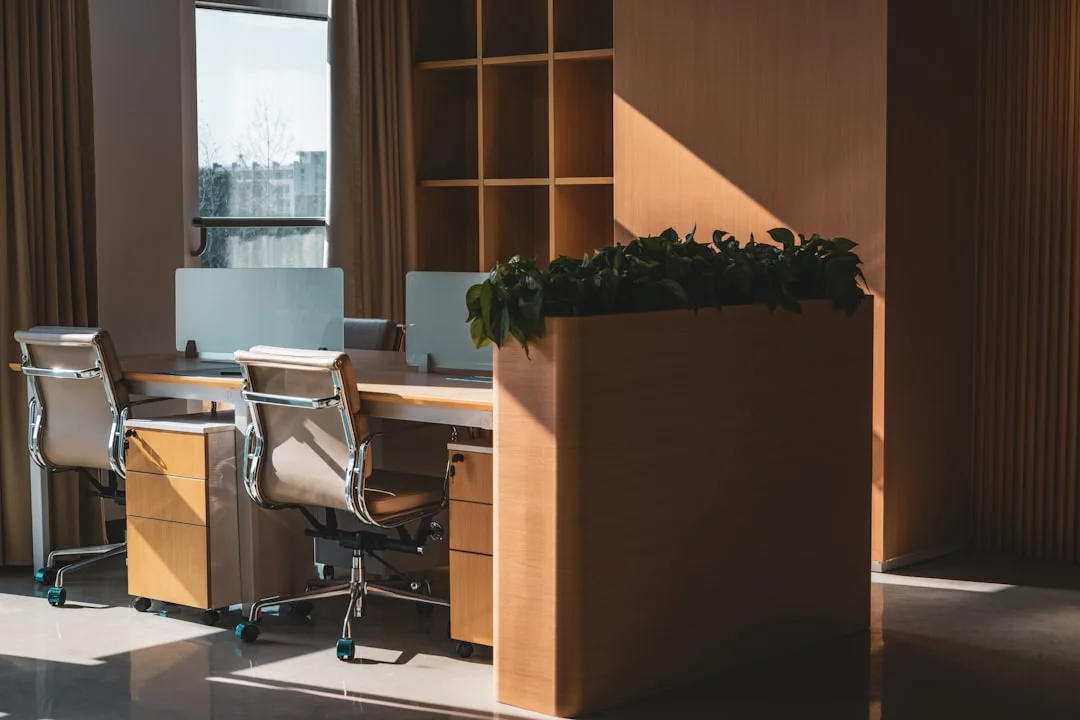
Contemporary understanding bridges these ancient principles with modern environmental psychology. Feng Shui's emphasis on clutter-free spaces aligns directly with research showing that physical clutter increases cognitive overload and stress, reducing efficiency. The command position theory is supported by studies on environmental psychology where a person's sense of security and control in a space impacts confidence and decision-making. The impact on mood and behavior is clear. A reception area that is bright, airy, and welcoming (good Qi flow) sets a positive first impression for clients, consciously or subconsciously. The use of natural light and plants (Wood element) is proven to improve employee well-being and creativity. Conversely, a workspace where employees sit with their backs to a high-traffic area or a door can create a subtle, persistent anxiety, lowering morale and focus—a phenomenon Feng Shui would describe as a lack of supportive "mountain" behind them. Practically, this means Feng Shui is less about mystical rituals and more about intentional design for human performance. It asks business owners to consider how their space makes people feel and act. Does the layout encourage collaboration or create silos? Does the environment drain energy or replenish it? The real-life meaning is creating a workspace that functionally and psychologically empowers both the business and the people within it to operate at their best.
Insights
- Position key leaders and financial workstations in a solid, supported area of the office away from major traffic flows to cultivate a sense of stability and control crucial for long-term planning.
- Introduce living plants and wooden elements in the eastern or southeastern areas of your space to energetically encourage new growth, team expansion, and the vitality of your business projects.
- Ensure the main entrance to your commercial premises is always well-lit, clearly marked, and completely free of physical obstructions to invite positive opportunities and clientele.
- Balance the dynamic Yang energy of open workspaces with quiet, enclosed Yin areas to provide necessary spaces for recovery, deep focus, and confidential discussions.
- Integrate the Five Elements subtly through a cohesive color scheme and material choices to create a psychologically complete environment that subconsciously supports all aspects of your operation.
Conclusion
Feng Shui offers a profound and systematic approach to shaping business environments for success. By viewing a commercial space as a living system interconnected with the activities within it, we move beyond aesthetics to environmental strategy. The principles of Qi flow, Yin-Yang balance, and the Five Elements provide a time-tested framework for designing spaces that reduce friction, enhance well-being, and symbolically align with prosperity. In modern terms, it is the art of configuring our surroundings to support our highest professional aspirations, recognizing that the spaces we inhabit are active participants in our commercial journey, not just passive containers. Ultimately, improving business luck through Feng Shui is about creating the most supportive and harmonious stage possible for the daily drama of commerce to unfold.